How Device Handoffs Reshape Participation Rates in Layered Reward Systems for Multi-Format Card Events
Morgan Zimmermann · Sep 24, 2026
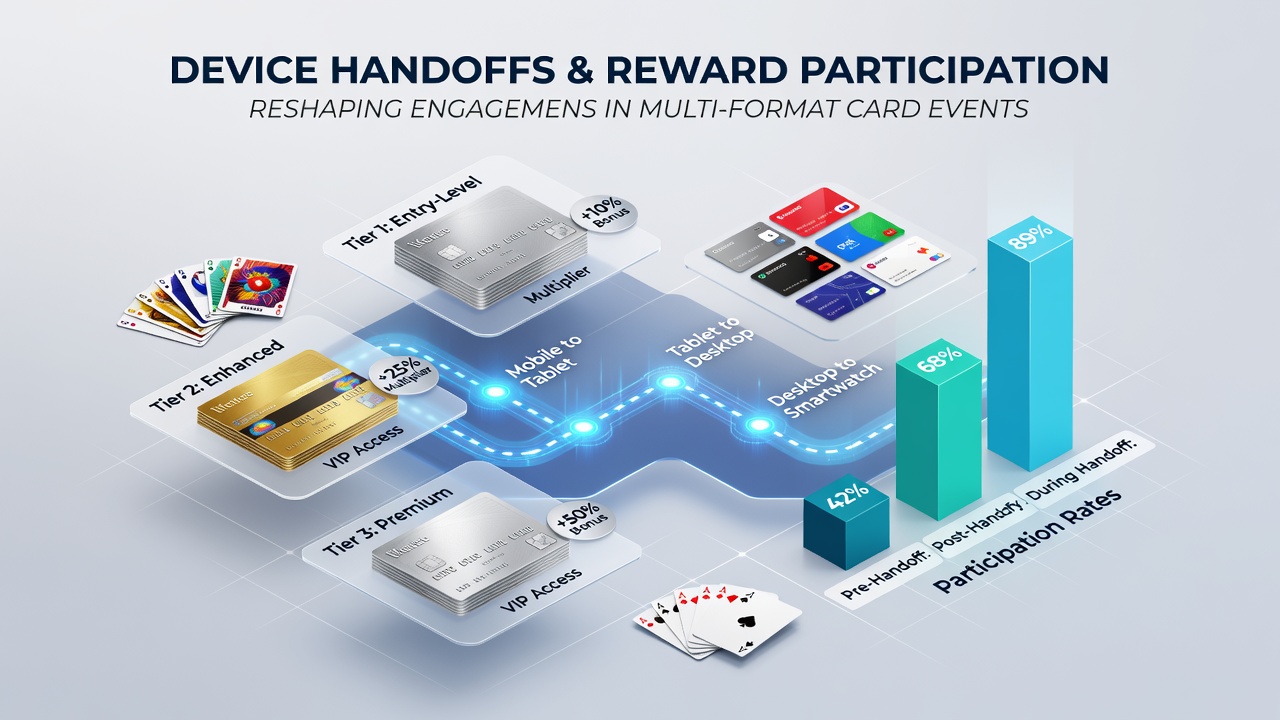
How Device Handoffs Reshape Participation Rates in Layered Reward Systems for Multi-Format Card Events
Device handoffs occur when participants move between mobile phones, tablets, and desktop computers while engaging in multi-format card events, and these transitions directly influence how players access and accumulate rewards across different layers such as entry bonuses, milestone achievements, and jackpot qualifiers. Research from industry tracking platforms shows that seamless handoffs maintain session continuity, whereas interruptions in login protocols or reward synchronization often reduce overall participation metrics in events that combine cash games, sit-and-gos, and multi-table tournaments.
Mechanics of Device Transitions in Card Platforms
Multi-format card events operate across synchronized servers that record user actions in real time, allowing rewards earned on one device to carry forward when a player switches interfaces. Data indicates that platforms using unified account systems experience higher completion rates for layered incentives because participants can resume progress without resetting progress bars or eligibility counters. Observers note that handoff efficiency depends on factors including authentication speed, cache retention, adn cross-device notification delivery, all of which affect whether a player remains active through multiple tournament stages or drops out midway.
Participation Patterns Across Formats
Studies of card event ecosystems reveal that players who execute smooth device handoffs participate in more simultaneous formats than those limited to single-device sessions. For instance, a participant might start a satellite tournament on a mobile app during commute hours and then continue on a desktop setup at home to monitor multiple tables, thereby unlocking secondary reward layers tied to total hands played or survival duration. Figures from platform analytics demonstrate elevated re-entry rates in events that support uninterrupted handoffs, particularly when layered systems include time-sensitive multipliers or progressive jackpot contributions that reset on session breaks.
Impact on Layered Reward Accumulation
Layered reward structures typically stack entry incentives, performance bonuses, and end-of-event prizes, yet device handoffs determine whether these layers activate fully or stall at intermediate points. When synchronization lags occur during switches, players lose access to ongoing trackers for metrics such as average pot size or knockout counts, which in turn lowers the probability of reaching higher reward tiers. Research conducted across global networks shows that events held in September 2026 incorporated enhanced handoff protocols following earlier platform updates, resulting in measurable lifts in cross-format engagement where participants completed both short-form and extended tournament structures within the same reward cycle.
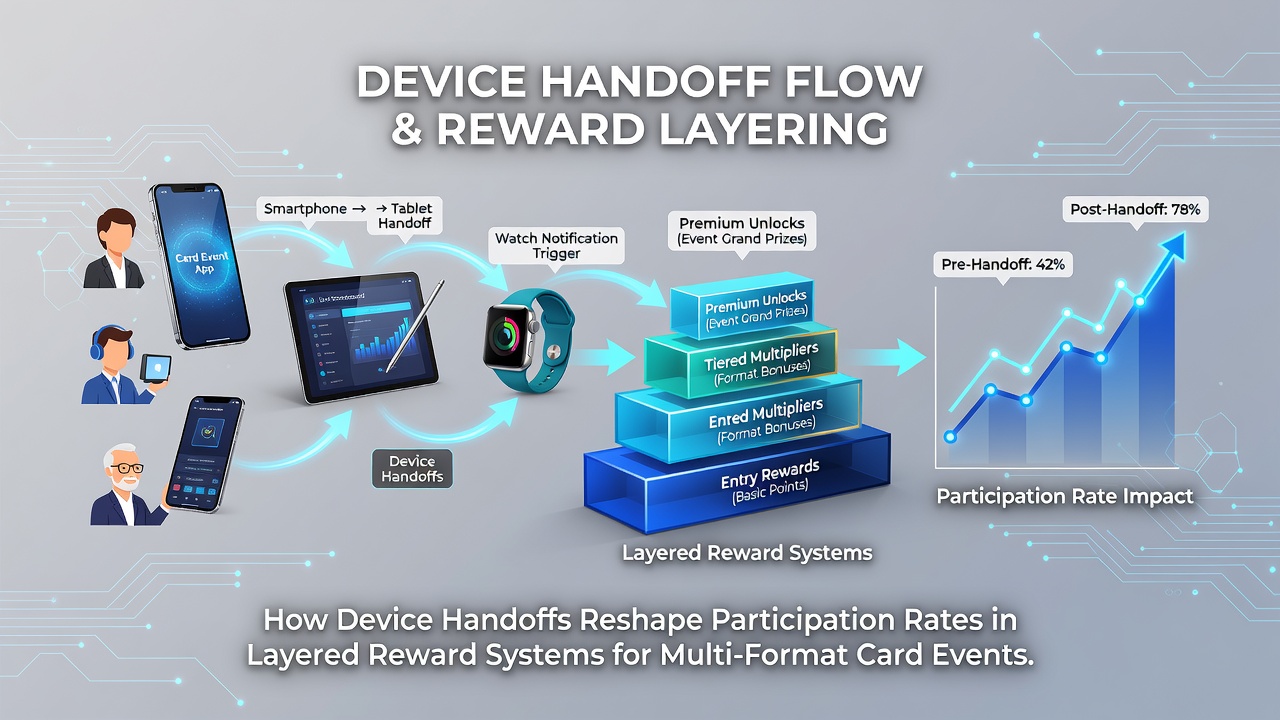
Those who study user behavior in digital card environments find that desktop-to-mobile transitions produce different reward outcomes compared with mobile-to-desktop moves, largely because desktop interfaces often display more granular progress details while mobile versions prioritize quick actions. This asymmetry means participants who begin on desktop and switch to mobile sometimes miss micro-rewards embedded in detailed tracking tools, whereas the reverse path allows continuation of basic eligibility without loss of core bonuses.
Regional Data and Platform Adjustments
Reports compiled by the Australian Gambling Research Centre highlight that card event operators in Oceania adjusted server-side handoff logic in mid-2026 to reduce drop-off during peak evening hours, leading to sustained participation across reward layers in multi-format schedules. Similar patterns appear in North American markets where operators integrated cloud-based session states that preserve reward status regardless of originating device. Evidence suggests these technical refinements correlate with increased volume of entries into secondary formats once primary tournament obligations conclude.
Platform developers have responded by embedding predictive caching that anticipates common handoff sequences, such as evening commutes followed by home desktop sessions. When these predictions align with actual user movement, layered rewards continue to accrue without manual re-authentication, preserving momentum through complex event structures. Data collected from multi-platform networks indicates that events without such caching experience measurable declines in jackpot eligibility claims because incomplete sessions fail to meet cumulative play thresholds.
Conclusion
Device handoffs function as a critical variable in determining how effectively participants navigate layered reward systems within multi-format card events. Continued monitoring of synchronization protocols and regional platform updates will clarify the extent to which these transitions sustain or diminish engagement across evolving tournament calendars.